From the desk of a Student Outreach counsellor
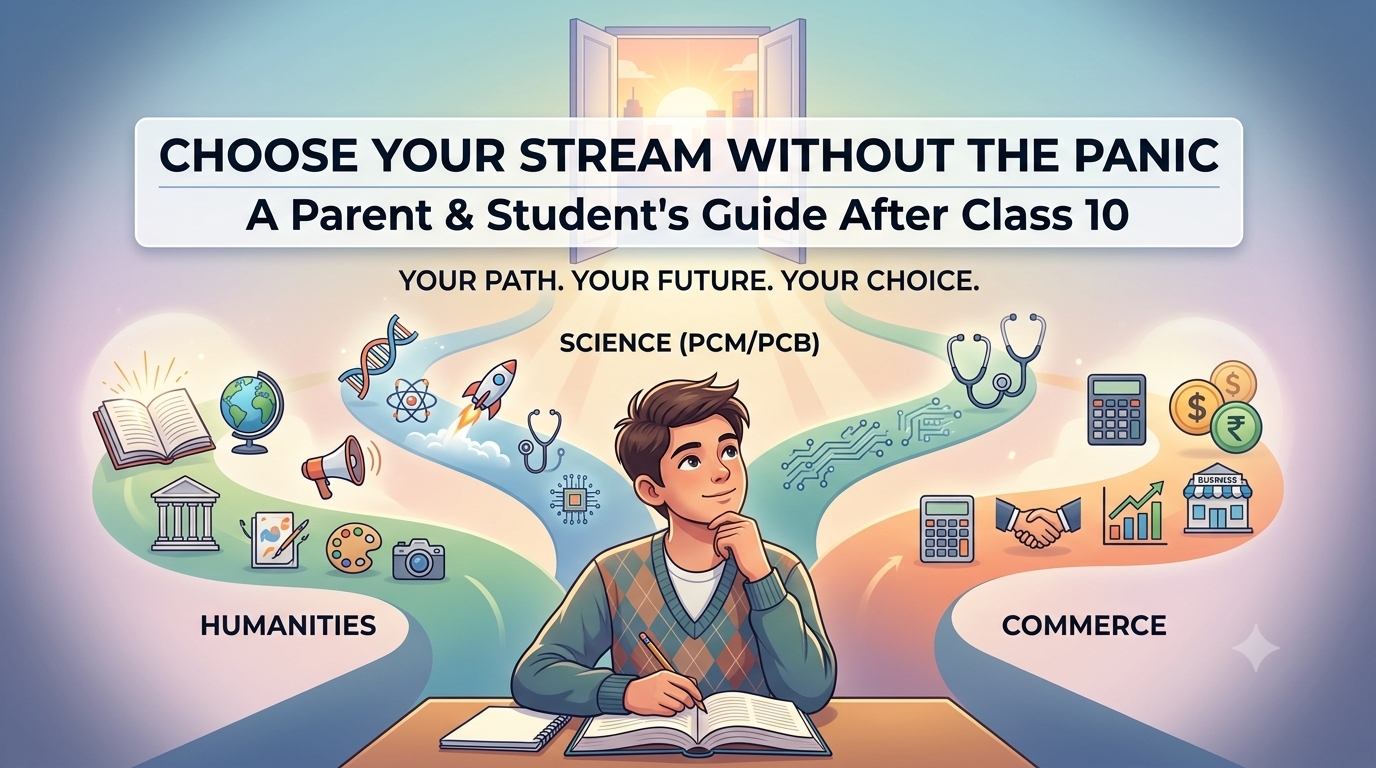
There’s a sentence I hear in nearly every first meeting, and it always arrives in the same worried tone: “Ma’am, if not engineering or medicine, then what?”
I’ve started answering it with a question of my own. “Who told you those were the only two?”
The honest answer, usually, is everyone. A whole generation in Bengal and across the East grew up with the idea that a respectable child becomes a doctor or an engineer, and everything else is a polite way of saying you didn’t manage it. I understand why. For a long time those were the clearest paths to security, and security mattered more than almost anything in families that had worked very hard to get a foothold. That instinct deserves respect, not mockery.
But I’ve been guiding students long enough to watch that map go badly out of date, and I’d be doing my job poorly if I let parents keep planning by it.
What's actually happened to the job market
The work that’s growing fastest right now simply doesn’t fit inside two professions. Data and AI roles are exploding, true — but so are jobs in design, in finance and the new fintech world, in psychology and counselling, in public policy, in the entire renewable-energy space. The global picture, when you look at what large employers are actually hiring for, is one of widening, not narrowing. Whole categories of meaningful, well-paid work exist now that didn’t have a name when today’s parents were choosing their own streams.
Meanwhile — and this is the part that surprises families — some of the “safe” old roles aren’t as safe as they sound. The routine, repeatable jobs are exactly the ones software is starting to do faster and cheaper. The careers that hold up are the ones that need judgement, creativity, and people skills. Those show up in medicine and engineering, certainly. They also show up in a dozen fields nobody at a wedding would call impressive
The cost of the two-career mindset
Here’s what worries me about clinging to the old script. It pushes a flood of students toward two crowded fields, regardless of whether they’re suited to them.
I’ve met brilliant young people who would have made wonderful designers, lawyers, economists, or teachers, sitting in coaching classes for entrance exams they have no feeling for, slowly losing confidence because they’re being measured against the one narrow thing they happen not to be good at. They’re not failing. They’ve just been put in the wrong race.
And the irony is that forcing a poorly-suited student into engineering doesn’t even deliver the security everyone wanted. A mediocre, unhappy engineer is far less secure than an excellent, engaged graduate of a field they actually love. Excellence is the real safety net, and you almost never get excellence out of resentment.
"But what's the scope?"
This is the question that ends a lot of promising conversations, so let me take it seriously rather than wave it away.
Scope is a fair thing to ask about. The mistake is asking it about the field instead of the person in the field. Almost any serious field today — law, psychology, design, commerce, the sciences, the humanities — has excellent scope for someone who becomes genuinely good at it and pairs it with a current skill, whether that’s data, technology, or simply the ability to communicate well. And almost any field, including engineering and medicine, has poor scope for someone who drifts through it without care.
So when a parent asks me “what’s the scope in psychology,” my honest answer is: enormous, for a student who’s drawn to it and works at it — and limited, for one who isn’t. The scope was never really in the subject. It was always in the child.
What I'd ask families to do instead
Stop starting with the list of acceptable careers, and start with the actual human being in front of you. What does this child do for hours without being told? What are they quietly good at? What kind of problems make them lean in rather than zone out?
Build outward from that, not down from a pre-approved shortlist. Add a skill the future rewards on top of whatever they choose. And widen the definition of “respectable” in your own head, because that definition is doing more to shape your child’s options than any cut-off ever will.
I’m not asking anyone to abandon ambition. I’m asking families to let ambition point in more than two directions. The world has opened up far more than the dinner-table conversation has caught up with. My job, often, is just to be the person who tells parents that it’s safe to look wider.
If “if not engineering or medicine, then what” is the question keeping your family up, come and sit with us. The list of good answers is much longer than you’ve been told — and one of them probably already fits your child.